How to photograph a photoshoot using only a prime lens


Many photographers believe they need multiple lenses to produce a complete photoshoot. In practice, a good result depends much more on mastering light, composition, and direction than on the amount of equipment.
During a children's photoshoot at Bosque dos Jequitibás in Campinas (SP), I decided to take on a personal challenge: to photograph practically the entire session using only one lens, the classic Canon EF 50mm f/1.8, known as the "50mm".
Besides making the equipment lighter throughout the walk, this decision forced me to think more creatively about each photograph.
How to photograph a photoshoot using only a fixed lens (50mm)
The challenge of photographing at Bosque dos Jequitibás
Bosque dos Jequitibás is one of the best-known places for photoshoots in Campinas.
Despite its beauty, it presents some challenges:
Very steep terrain;
Long walks between the scenes;
Variable lighting due to the trees;
Many elements can distract from the composition.
That's precisely why I decided to simplify my equipment.
Instead of carrying several lenses, I only took the Canon 50mm f/1.8.
This limitation ended up becoming an excellent exercise in creativity.
The only exception
Throughout almost the entire shoot I used only the 50mm lens. There was only one moment when I needed to change lenses.
In the photograph below, I was standing on a table while the model was lying down. On an APS-C camera, there simply wasn't enough distance to frame the entire scene using the 50mm.
It was the only photograph taken with a wide-angle lens.
After that, the "50mm" went back into the camera until the end of the shoot.

What I learned photographing with only one lens.
1. You start moving around much more.
Without zoom, every change in framing depends exclusively on the photographer.
This means walking more, observing the environment better, and constantly looking for new angles.
At first, it seems like a limitation. After a few minutes, you realize you're composing much more interesting images.

2. Fewer elements usually mean better photographs.
A 50mm prime lens naturally reduces the field of view.
This forces you to carefully choose what truly matters within the image.
Instead of trying to show the entire scene, try to tell a story using only the essential elements.
The result is usually a cleaner photograph with fewer distractions.
3. Explore the environment in different ways
A limitation can reveal possibilities that would normally go unnoticed.
During this shoot, I found a small, old building hidden in the woods.
Using only an aged wall and a few old objects, I managed to create a completely different atmosphere from the photographs taken in the green area.
It's not always necessary to change locations.
Sometimes it's enough to completely change the way you observe the environment.
4. Take advantage of the blur (bokeh)
One of the biggest advantages of the Canon 50mm f/1.8 is its beautiful background blur.
Even when the aperture isn't fully open, the compression of perspective helps to separate the subject from the environment.
Whenever possible, try to use elements close to the lens to create depth.
In some images, I used water from a fountain and small blurred plants to produce a more artistic effect.
These small details make a big difference in the final result.
5. Experiment with different perspectives
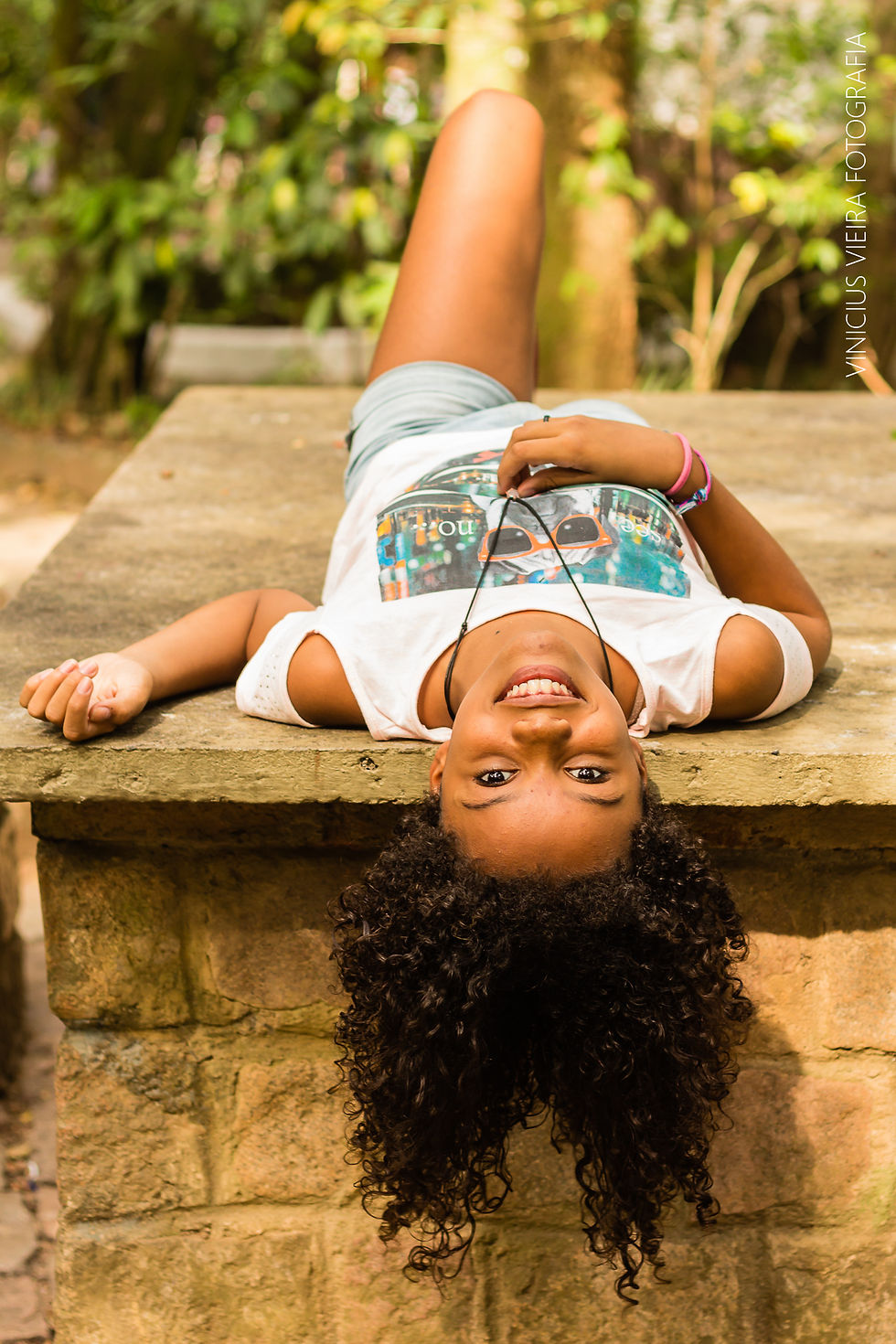
Not all good photographs are taken at eye level.
During the shoot, I photographed from above, from below, and used different angles to vary the composition.
More important than memorizing technical terms is developing a keen eye.
When you experiment with new angles, you discover possibilities that would normally go unnoticed.
Is it worth shooting an entire shoot with just one lens?
In my experience, yes.
Limiting your equipment forces you to develop skills that no new accessory can teach.
You begin to:
think more about composition;
move constantly;
make better use of available light;
observe details of the environment;
create cleaner and more focused photographs.
If you've never tried this exercise, I highly recommend it.
Even if you later return to using multiple lenses, this experience will certainly influence your way of photographing.
Conclusion
Creativity rarely springs from abundance.
Often it emerges precisely when we accept working with some limitations.
That's exactly what happened in this shoot.
The Canon 50mm f/1.8 remains one of the simplest and most accessible lenses on the market, but also one of the best for those who want to evolve technically.
And you?
Have you ever taken on the challenge of photographing an entire shoot using only one lens? Share your experience in the comments.
seeya!


Comments